A busy November for a band that never changed
SPITZ release kettle, their 18th original album, on November 25, 2026. A vinyl edition follows on December 23, 2026, and the 13-city, 28-show SPITZ JAMBOREE TOUR 2027 "kettle" opens at Yokohama Arena on March 6, 2027. The weeks around the release are crowded too. On November 13 the band were announced as first-time performers on Nippon TV's Best Artist 2026 (ベストアーティスト2026), broadcast on November 28, and on November 20 they were named among the recipients of a special award at the 68th Japan Record Awards.
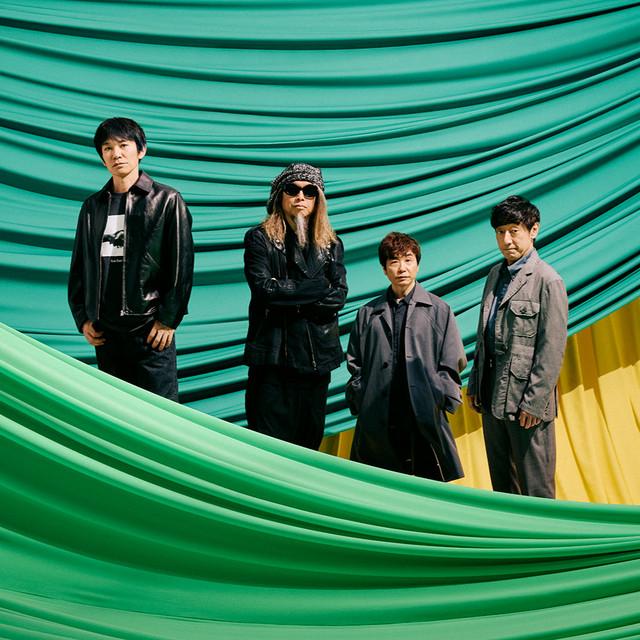
The lineup is what makes the back catalogue worth hearing as a whole. The four members formed the band in 1987, made their major debut in 1991 and have never changed: Masamune Kusano (vocals, guitar), Tetsuya Miwa (guitar), Akihiro Tamura (bass, and the band's leader) and Tatsuo Sakiyama (drums). Kusano writes every lyric and composes most of the songs. With that much continuity, a SPITZ discography plays like one long story, and it divides naturally into four chapters.
Era 1: From beat punk to their own voice (1991–1992)
SPITZ started out as a punk band. Their indie-era sound was described as beat punk, and a club manager at Shibuya La Mama told them bluntly that they were a THE BLUE HEARTS copy and would go nowhere. Kusano changed course. Under the influence of Donovan he picked up an acoustic guitar, which suited his soft, wide-ranging voice, and early songs such as "Koi no Uta" (Love Song) and "Hibari no Kokoro" (Skylark's Heart) date from that shift.
The major debut came on March 25, 1991, when Polydor released the album Spitz (スピッツ) and the single "Hibari no Kokoro" on the same day. Radio picked up the album track "Ninoude no Sekai", but nothing charted. Namae o Tsuketeyaru (名前をつけてやる, "I'll Give You a Name") followed just nine months later. Its lead single, "Majo Tabi ni Deru" (The Witch Sets Off), had strings arranged by Tomoki Hasegawa, who went on to co-produce the orchestral 1992 mini-album Aurora ni Narenakatta Hito no Tame ni. The same year brought Hoshi no Kakera (惑星のかけら), a record built mostly on distorted guitar and heavily influenced by grunge and shoegaze. None of these singles or albums reached the national top 100, and sales were falling.
Era 2: The breakthrough (1993–1996)
Partly out of guilt toward their management, the band set out to make a more accessible record. Crispy! (CRISPY!, 1993) was their first album with an outside producer, Masanori Sasaji, known for his work with Unicorn. Kusano disliked its heavy synths and brass, and the album failed to chart. Then the recut single "Kimi ga Omoide ni Naru Mae ni" (Before You Become a Memory) gave them their first Oricon entry, peaking at No. 33. Ticket sales rose, the venues grew, and the band decided to stick with Sasaji.
The hits followed. In 1994 Takayuki Hijikata produced the singles "Sora mo Toberuhazu" (I Should Be Able to Fly) and "Aoi Kuruma" (Blue Car), and Sora no Tobikata (空の飛び方), with Sasaji back in the producer's chair, entered the chart at No. 14. "Robinson" (1995) became their first Oricon top 10, stayed on the chart for more than 30 weeks and sold about 1.62 million copies. Hachimitsu (ハチミツ, "Honey") became their first No. 1 album, sold about 1.7 million and won Best Album at the 37th Japan Record Awards. In 1996 "Sora mo Toberuhazu" became the theme of the drama Hakusen Nagashi, and the reissued single went to No. 1 and sold a million. "Cherry" sold about 1.61 million and "Nagisa" debuted at No. 1; both landed on Indigo Chiheisen (インディゴ地平線), which closes with "Cherry".
This is when the SPITZ sound settled: guitars with restrained distortion, plenty of arpeggios, and everyday lyrics open to more than one reading. Kusano slips the uncanny, thoughts of life and death, and veiled eroticism into ordinary scenes, and he picks words as much for their sound as their sense.
Era 3: Self-production and the search for a sound (1997–2007)
In 1997 SPITZ took over their own production, bringing in Yuichi Tanaya, then of Carnation, to arrange the single "Unmei no Hito" (The One). Fake Fur (フェイクファー) arrived in 1998, and keyboardist Hiroko Kuji joined them on tour for the first time. In October 1999, chasing a sound of their own, they made their first overseas recordings in Los Angeles. The tracks were mixed in Miami by Tom Lord-Alge and mastered by Stephen Marcussen, who has been indispensable to them ever since. While they were away, their label decided without their permission to release the best-of RECYCLE Greatest Hits of SPITZ. The band had said a best-of would mean a breakup, so they posted an apology; the album went on to sell over 2 million copies.
Kokichi Ishida produced Hayabusa (ハヤブサ, 2000). Mikazuki Rock (三日月ロック) followed in 2002, the same year their first eight albums and the 1992 mini-album were reissued with new Marcussen remasters. Iroiro Goromo (色色衣, 2004) is a special album rather than a numbered one, and the run closes with the 11th and 12th albums, Souvenir (スーベニア, January 12, 2005) and Sazanami CD (さざなみCD, October 10, 2007).
Era 4: Arenas, setbacks and the road to kettle (2008–2026)
SPITZ once said they wanted to stay in ordinary concert halls, and Kusano had said they had no plans to play the Nippon Budokan. Even so, 2009 brought their first solo arena shows, at Saitama Super Arena and Osaka-jo Hall, and 2014 their first solo Budokan date. In between came Togemaru (とげまる, October 27, 2010) and a hard 2011: after Kusano developed acute stress disorder in the aftermath of the Great East Japan Earthquake, shows were cancelled and made up later. Orutana (おるたな, February 1, 2012) is another special album. Chiisana Ikimono (小さな生き物, September 11, 2013) was followed by their first solo outdoor show in 16 years.
Samenai (醒めない) came out on July 27, 2016, and Mikke (見っけ) on October 9, 2019. Mikke includes "Yasashii Ano Ko" (That Gentle Girl), the theme of the NHK morning drama Natsuzora, and its tour was partly postponed by COVID-19. In 2021 "Murasaki no Yoru o Koete" (Beyond the Purple Night), the ending theme of TBS's NEWS23, arrived as their 44th single to mark the 30th anniversary of their debut, and "Daikōbutsu" (Favorite Food) followed as the theme of the film Kinō Nani Tabeta? Both songs appear on Himitsu Studio (ひみつスタジオ, 2023). The latest singles are "灯を護る" (2025), "Mishiranu Ito" (見知らぬ糸, August 7, 2026) and "Kitsunenobotan" (キツネノボタン, November 2, 2026).
Where to start
- Newcomers: start with Hachimitsu. It documents the "Robinson" breakthrough, it was their first No. 1 album and a Japan Record Awards Best Album winner, and it captures the arpeggio-led sound the band settled into.
- Fans of the noisier, pre-fame band: try Hoshi no Kakera. Its grunge- and shoegaze-soaked distortion is the sharpest contrast to the restrained guitars that came later.
- Listeners curious about craft: go for Hayabusa, the album that followed the move to self-production and the Los Angeles and Miami sessions the band made in search of their sound.
- Completists preparing for kettle: play Mikke and then Himitsu Studio, the latest stretch before the new album, taking in "Yasashii Ano Ko", "Murasaki no Yoru o Koete" and "Daikōbutsu" along the way.
The albums at a glance
| Album | Year | Era |
|---|---|---|
| Spitz (debut) | 1991 | 1 |
| Namae o Tsuketeyaru | 1991 | 1 |
| Hoshi no Kakera | 1992 | 1 |
| Crispy! | 1993 | 2 |
| Sora no Tobikata | 1994 | 2 |
| Hachimitsu | 1995 | 2 |
| Indigo Chiheisen | 1996 | 2 |
| Fake Fur | 1998 | 3 |
| Hayabusa | 2000 | 3 |
| Mikazuki Rock | 2002 | 3 |
| Iroiro Goromo (special album) | 2004 | 3 |
| Souvenir | 2005 | 3 |
| Sazanami CD | 2007 | 3 |
| Togemaru | 2010 | 4 |
| Orutana (special album) | 2012 | 4 |
| Chiisana Ikimono | 2013 | 4 |
| Samenai | 2016 | 4 |
| Mikke | 2019 | 4 |
| Kachōfūgetsu+ (花鳥風月+) | 2021 | 4 |
| Himitsu Studio | 2023 | 4 |
| Gekijōban Yasashii Spitz a secret session in Obihiro | 2024 | 4 |
| kettle (18th original album) | 2026 | 4 |