

About
Overview
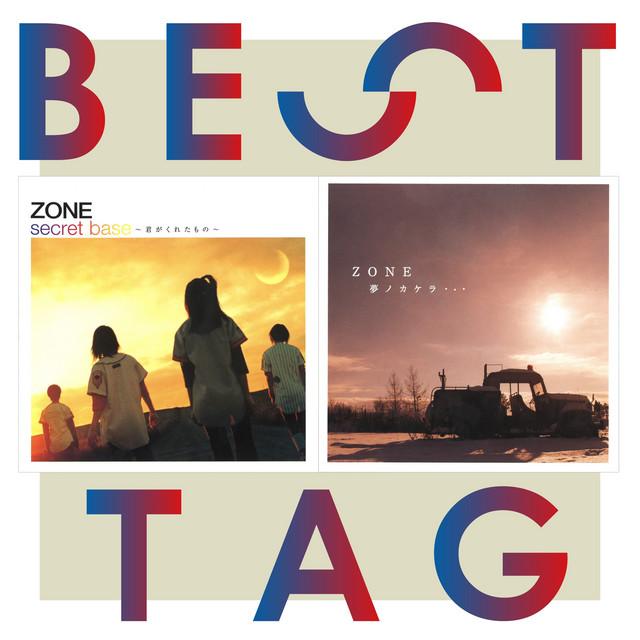
ZONE (ゾーン) was an all-female Japanese band from Sapporo, Hokkaido. It began as a dance-and-vocal group and evolved into a band playing its own instruments, earning the label "bandol" (a blend of "band" and "idol"). The group was managed by RunTime Music Entertainment (founded from the Studio RunTime training school) and released music through Sony Records. Its official fan club was called "ザジズゼZONE." ZONE was active from 1998 to 2005 and again from 2011 to 2013. Its signature song, "Secret Base (Kimi ga Kureta Mono)," sold around 744,000 copies in Japan and peaked at No. 2 on the Oricon chart.
Career
Formation and indie debut
ZONE was formed in March 1998 at Studio RunTime in Sapporo as an eight-member dance-and-vocal group led by TAKAYO. A planned major-label debut produced by Tetsuya Komuro and Kiyoshi Matsuo came up at the time but fell through. The lineup was gradually reduced to four members—Miyu Nagase, Mizuho Saito, Maiko Sakae and Takayo Ookoshi—and the group made its indie debut on December 18, 1999, with the single "Believe in Love" on Knockers Records. The video for the B-side "Boku wa Magma," in which the members brandished instruments they couldn't yet play as props, inspired the bandol concept. A Sony Records representative who saw live footage of the group with instruments felt that, in a market crowded with dance groups, ZONE had breakthrough potential if they could play as well as sing and dance.
Major debut and success
ZONE made its major debut on February 7, 2001, with the single "Good Days" on Sony Records. Although the members were initially reluctant, their agency steered them toward a band format; from the third single, "Secret Base (Kimi ga Kureta Mono)," released August 8, 2001, they played live instruments and drew attention as a skilled female band. The song won the Best New Artist awards at the All Japan Request Awards and the 34th Japan Cable Awards, the New Artist Award at the 43rd Japan Record Awards, and New Artist of the Year at the 16th Japan Gold Disc Awards. ZONE appeared on NHK's Kōhaku Uta Gassen three times, performing the song twice.
Between 1999 and 2005 the group released 17 singles (including the indie debut), three studio albums—Z (February 14, 2002), O (November 27, 2002) and N (February 18, 2004)—and several DVDs. Singles included "Dai Bakuhatsu No.1," "Sekai no Hon no Katasumi kara," "Yume no Kakera...," "Hitoshizuku," "Akashi," "Shiroi Hana," "True Blue/Renren...," "Hanabi (Kimi ga Ita Natsu)," "Boku no Tegami," "Sotsugyō," "Taiyō no Kiss," "Glory Colors (Kaze no Tobira)" and "Egao Biyori." A PlayStation 2 game, Wonder Zone, followed in October 2002. The members also balanced their careers with high school and all graduated.
Lineup changes and breakup
After the 54th Kōhaku Uta Gassen in 2003, Takayo left to attend junior college. Tomoka Nishimura, one of the two original members cut when the group shrank to four, joined in 2004. That year Mizuho also announced her departure, wishing to reflect on her teenage years and consider her future after high school. The remaining members had planned to continue, but during the jacket shoot for "Egao Biyori" they concluded that "ZONE without Mizuho is not ZONE." The band disbanded after a final concert at Nippon Budokan on April 1, 2005. The compilation E: Complete A Side Singles, released April 13, entered the Oricon chart at No. 1 with about 98,000 first-week copies—the band's first chart-topping album. Ura E: Complete B Side Melodies (April 19, 2006) and the DVD Zone Best Memorial Clips (May 24, 2006) followed.
During the hiatus, Nagase and Maiko joined former Princess Princess members Kyoko Tomita and Atsuko Watanabe in the one-off super band "Zonpri" at the April 29, 2008 event "NAON no YAON" at Hibiya Open-Air Concert Hall. On November 30, 2008, Nagase, Maiko and Nishimura performed "Egao Biyori" at an Akasaka BLITZ event, a one-night reunion after three years and seven months.
Reunion and final event
In 2011, as a charity effort supporting recovery from the Great East Japan Earthquake, Miyu, Maiko and Tomoka reunited for a limited period in August—ten years after "Secret Base," as the lyrics suggest. After the August 14 Akasaka BLITZ show, "10 Nen Go no 8 Gatsu... ZONE Fukkatsu shimaSHOW!!," they extended activities through the year. Zone Tribute was released on August 10. In October Tomoka left for health reasons, leaving Miyu and Maiko as a duo, and at a charity live at Zepp Tokyo on December 20 they announced plans to continue into 2012. They released the single "Treasure of the Heart Kimi to Boku no Kiseki" on June 6, 2012.
On February 13, 2013, Nagase was dismissed by the agency for "immoral behaviour" and "frequent non-fulfillment of duties." On March 2, Maiko announced she would end ZONE, and on April 7, 2013, she held "ZONE FINAL EVENT" at Shibuya O-EAST alone, officially closing the band's history.
Members
- Takayo Ookoshi — vocals, guitar, leader (1999–2003)
- Miyu Nagase — lead vocals, guitar (1999–2005, 2011–2013)
- Mizuho Saito — vocals, drums, keyboards; leader after Takayo (1999–2005)
- Maiko Sakae — vocals, bass (1999–2005, 2011–2013)
- Tomoka Nishimura — vocals, guitar, keyboards (2004–2005, 2011)
Musical style
ZONE's defining trait was its transformation from a dance group into a band that played live. Most members had no instrumental background at first; Mizuho once described the early group as essentially an "air band." They practiced and became credible performers, and were sometimes compared with fellow Hokkaido girl band Whiteberry.
Their songs gained wide exposure through tie-ins: "True Blue" was the opening theme of the 2003 Astro Boy anime (with a ballad version of the Astro Boy theme as an ending), "Hitoshizuku" was the Japanese theme of Ice Age, and "Shiroi Hana" was the Japanese theme of Final Fantasy Tactics Advance. "Secret Base" was covered by voice actors as an ending theme for the anime Kyō no Go no Ni and Anohana: The Flower We Saw That Day, and by the band SCANDAL, who also made a music video for their version.
Related artists






Discography
Meltdown 4 (The Producer Version)
1 track
The Song of Heaven (The Producer Version)
1 track

Planet Uku (The Producer Version)
1 track
Dance Now On Deep (The Producer Remix)
1 track
Dance With Me
1 track
Fantasia Negra
1 track

Tuesdays in Detroit
1 track

Saudade de Você (Longing for You)
1 track

Saudade de Você (Longing for You)
1 track
Radium One Prime
1 track