


About
Overview
Motoharu Sano (佐野元春, born March 13, 1956, in Tokyo) is a Japanese singer-songwriter and musician who debuted in 1980 with the single "Angelina." A graduate of Rikkyo University, he is a frontman known for lyrics that carry a poet's message, a wide range of rhythms and arrangements, and techniques such as rap and spoken word. He has released a great many eclectic songs and earned high acclaim regardless of commercial success. In 2007, Rolling Stone Japan ranked his album Someday number 11 among the greatest Japanese rock albums of all time. He now runs the independent label Daisy Music and continues pioneering efforts in internet-based music activity.
Career
Before debut
Born in Kanda, Chiyoda, Tokyo, Sano was the son of a company owner and a former stage actress who ran a jazz café in Aoyama. He first dreamed of becoming a manga artist before turning to music, falling for British Invasion rock and picking up the guitar as a teenager. Discovering Bob Dylan in his first year at Rikkyo High School was a major influence, as were Jack Kerouac and the Beat Generation. He formed the band Backrain Motoharu Section in high school and entered Rikkyo University in 1974. The band won the Kanto-Koshinetsu regional round of the Yamaha Popular Song Contest with "Bye Bye C-Boy" but took no prize at the finals and disbanded. He then worked with Nanako Sato, co-writing songs and appearing on her albums. In 1978 he won an Outstanding Song Award at the same contest with "Do What You Like," but turned down debut offers and took a job at an advertising agency. A research trip to the United States in autumn 1979 convinced him to pursue music again; he quit his job and signed with Epic/Sony at the urging of producer Yoji Kosaka.
Debut and the early trilogy
Sano debuted on March 21, 1980, with the single "Angelina," followed in April by the album Back to the Street. That year he named his backing band THE HEARTLAND and began writing songs for other artists, starting with Kenji Sawada. In 1981 he began the NHK-FM radio show Motoharu Radio Show, released the single "Someday," and joined Eiichi Ohtaki's Niagara Triangle project. His first two albums did not sell well, but a growing fan base built through radio and live shows led to the May 1982 album Someday, which used a Phil Spector-style Wall of Sound and reached No. 4 on the Oricon chart. His 40-date Rock & Roll Night Tour (September 1982 to March 1983) sold out nationwide, and Koji Kikkawa and Yutaka Ozaki later said they were moved by it. The compilation No Damage reached No. 1 on Oricon, and in May 1983 Sano moved to New York.
New York and Visitors
In New York he handled his own production and management, mixing with club-scene musicians and avant-garde filmmakers, and recorded Visitors with a "new sound" that absorbed rap and made it his own. The lead single "Tonight" was released in April 1984 on both 7-inch and 12-inch, with the 12-inch outselling the 7-inch and sparking a boom in 12-inch singles in Japan. Visitors came out in May 1984 and he returned home in June; despite divided reactions it hit No. 1. It included "Complication Shakedown," the first Japanese-language rap by a major-label artist. The 70-date Visitors Tour '84–'85 featured avant-garde staging with stacks of TV monitors, inspired by Nam June Paik. In November 1984 he composed Seiko Matsuda's "Heart no Earring" under the name Holland Rose.
First top-10 hit and M's Factory
In February 1985 "Young Bloods," the theme for International Youth Year, became his first top-10 hit, with royalties donated to African refugee relief. He performed with Southern All Stars at "All Together Now" in June, released the cassette-book Electric Garden (spoken word, poetry and photography) in May, and represented Japan at Live Aid in July with "Shame." In 1986 he founded his own label, M's Factory, launched the quarterly magazine THIS, and held the monthly "Tokyo Monthly" shows at Nippon Seinenkan, which were so popular that ticket phone lines jammed.
UK influences and beyond
Café Bohemia (December 1986), which included "Young Bloods" and "Christmas Time in Blue," drew on jazz, soul, ska and reggae, reflecting the UK trend of blending black and world music into pop, with London engineer Alan Winstanley. A roughly 80-date tour, Café Bohemia Meeting, cemented THE HEARTLAND's playing power; his first solo stadium concert at Yokohama Stadium (September 1987) became the No. 1 live album Heartland (April 1988). In August 1988 he released "Keikoku Doori Keikaku Doori" on the nuclear power debate, and in 1989 the indie compilation mf Various Artists Vol.1. He then went to Britain to record with producer Colin Fairley and UK pub-rock musicians. Later albums include NapoleonFish Day (1989), The Circle (1993), Fruits (1996), The Sun (2004), Coyote (2007), Zooey (2013), Blood Moon (2015) and Maniju (2017). On August 21–22, 2015, at Tokyo International Forum, he sang lead on "Haikara Hakuchi" with Takashi Matsumoto, Haruomi Hosono and Shigeru Suzuki of Happy End, in place of the late Eiichi Ohtaki, at a concert marking Matsumoto's 45th anniversary as lyricist.
Recent activity
He released the single "Gin no Tsuki" in 2021; the albums ENTERTAINMENT! and Ima, Doko plus the single "Chloe" and the live album 2022 LIVE AT SENDAI, FUKUOKA, OSAKA in 2022; and "Sayonara Melancholia" in January 2023. New recordings followed: "Youngbloods (New Recording 2024)" in June 2024 and "Tsumaranai Otona ni wa Naritakunai (New Recording)" in January 2025. In 2025 he issued HAYABUSA JET I (March) and HAYABUSA JET II (December), the archival live albums The Circle Tour Final at Nippon Budokan 1994.4.24 (March) and LAND HO! Live at Yokohama Stadium 1994.9.15 (October), and in November the "Christmas Time in Blue" 40th Anniversary Edition and a new recording of "Rain Girl." The single "Signal (Namae no Nai Konton)" is listed for October 2, 2026.
Musical style
Rooted in rock and roll, Sano moves across kayōkyoku, city pop and J-pop, singing mainly in Japanese and occasionally English. His poetic lyrics, shaped by Bob Dylan and Beat literature, are paired with Wall of Sound production, rap and spoken word, and rhythms from jazz, soul, ska and reggae. His independent approach, spanning his own labels, production work and media projects, is another hallmark.
Videos
Popular Videos
Latest Videos
Related artists



Discography

シグナル (名前のない混沌)
1 track

HAYABUSA JET II
10 tracks

レイン・ガール (New Recording)
1 track

CHRISTMAS TIME IN BLUE -聖なる夜に口笛吹いて- (40th Anniversary Edition)
4 tracks
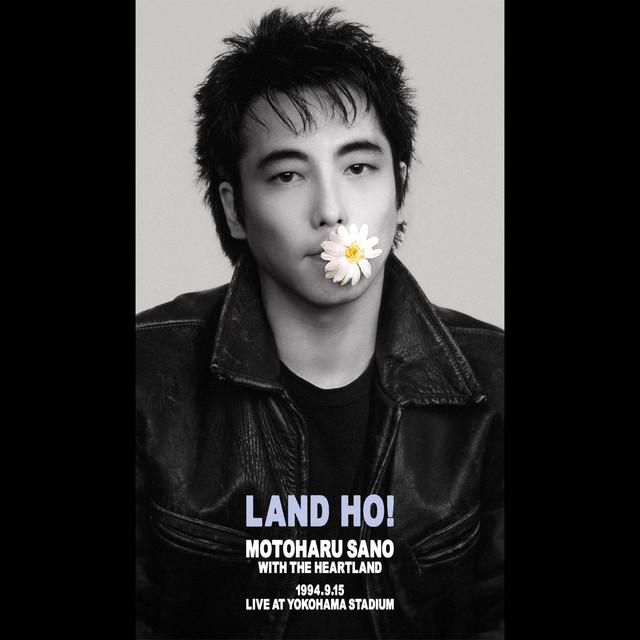
LAND HO! LIVE AT YOKOHAMA STADIUM 1994.9.15
31 tracks
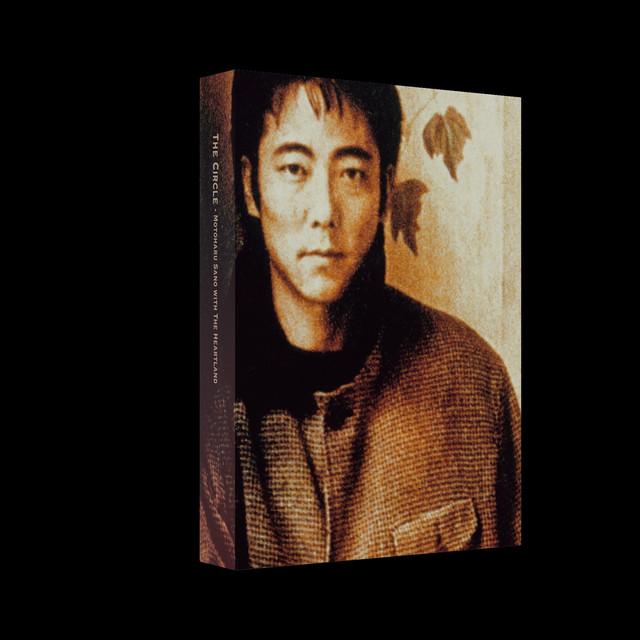
The Circle Tour Final 日本武道館ライブ 1994.4.24
29 tracks

HAYABUSA JET Ι
10 tracks

つまらない大人にはなりたくない (New Recording)
1 track

Youngbloods (New Recording 2024)
1 track

さよならメランコリア
1 track