

About
Overview
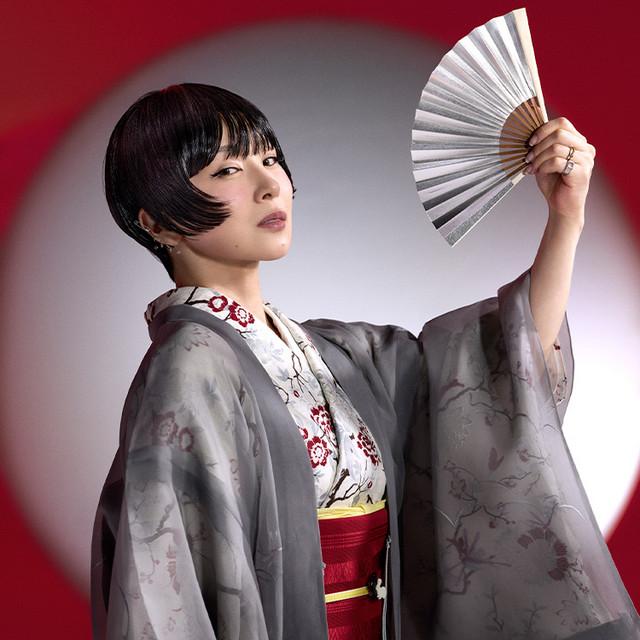
Ringo Sheena (椎名林檎, Shiina Ringo; real name Yumiko Shiina, born November 25, 1978 in Urawa, Saitama) is a Japanese singer, songwriter and musician, and the founder and lead vocalist of the band Tokyo Jihen. She is managed by Kuroneko-do and records for EMI Records. She calls herself "Shinjuku-kei Jisaku-Jien-ya" (a Shinjuku-style writer-performer). HMV ranked her number 36 among Japan's top 100 musicians in 2003, and in 2009 she received the Newcomer Fine Arts Award in the Popular Culture category from the Ministry of Education, Culture, Sports, Science and Technology. In December 2017 she was chosen for the Tokyo Olympics' four-ceremony general planning team. Her older brother is singer-songwriter Junpei Shiina.
Career
Early life and path to debut
Born with congenital esophageal atresia, she underwent major surgery shortly after birth. Her father's job took the family to Shimizu, Shizuoka, and then to Fukuoka, where she spent about seven years until her post-high-school freeter period. She started piano at four and studied classical ballet, but gave up ballet because of lingering effects of the surgery. At Chikuzen High School she joined the light music club, played in many bands and began writing songs. In 1995 her band Marvelous Marble won the Fukuoka round of the TEENS' MUSIC FESTIVAL and received an encouragement prize at the national finals. She left high school after her second year and made demo tapes while working part-time jobs. In 1996 she entered the MUSIC QUEST JAPAN FINAL as a solo artist under the name Ringo Shiina, won an excellence award with "Koko de Kiss Shite", and signed with Toshiba EMI.
1998-2003: Debut to the end of her first solo period
She debuted on May 27, 1998 with the single "Kōfukuron", followed by "Kabukichō no Joō", which drew attention as she presented herself as "Shinjuku-kei", a play on Shibuya-kei. "Koko de Kiss Shite" (January 1999) became her first hit, and her debut album Muzai Moratorium (February 1999) sold over a million copies. The single "Honnō" (October 1999) also became a million seller and made her widely known; its music video was set in a hospital. Her second album Shōso Strip (March 2000) sold more than 2.3 million copies according to Oricon and won the Japan Gold Disc Award for Rock Album of the Year and the Best Album award at the 42nd Japan Record Awards. Around then she ranked alongside Hikaru Utada and Ayumi Hamasaki among Japan's top three female artists, but she was uncomfortable being treated as an icon and had intended to retire the name after three albums. She married guitarist Junji Yayoshi in November 2000, gave birth to a son in July 2001, and divorced in January 2002. Her first cover album Utaite Myōri: Sono Ichi followed in 2002. In January 2003 "Kuki (STEM) Daimyō Asobi Hen" became her first Oricon number-one single, and her third album Kalk Samen Kuri no Hana came out in February. Her nationwide tour that summer included her first Nippon Budokan show in September. Her single "Ringo no Uta" (November 2003), featured on NHK's Minna no Uta, summed up her career, and it marked the pause in her solo activity.
2004-2007: Tokyo Jihen
On May 31, 2004, she announced the band Tokyo Jihen. The original lineup was Ringo Sheena (vocals, guitar, melodica), Mikio Hirama (guitar), Seiji Kameda (bass), H Zett M (keyboards) and Toshiki Hata (drums). Hirama and H Zett M left in 2005 and were replaced by Ryosuke Nagaoka (Ukigumo) and Ichiyo Izawa. The band played Osaka-Jo Hall and the Budokan in February 2006. In 2004 Sheena also served as music director for the stage play KKP No. 004 Lens. On November 11, 2006 she released the digital-only "Karisome Otome (Death Jazz ver.)" with Soil & "Pimp" Sessions, marking her return as a solo artist; it topped the charts on iTunes Japan. The song was the theme for Mika Ninagawa's film Sakuran (2007), for which Sheena served as music director for the first time. She released the single "Kono Yo no Kagiri" in January 2007 and the album Heisei Fūzoku with violinist Neko Saitō in February. In June 2007 she composed the ending theme "Tamatebako" for the kabuki play Sannin Kichisa, starring Kanzaburo Nakamura.
2008-2012: Tenth anniversary and Tokyo Jihen
In 2008 Sakuran earned her the Japan Academy Prize for Outstanding Achievement in Music, and she was nominated for Best Composer at the Asian Film Awards. For her tenth anniversary she released the compilation Watashi to Hōden, the video collection Watashi no Hatsuden and the CD-BOX MoRA, and held three nights of concerts at Saitama Super Arena in November. She provided two songs for Tokio in September 2008 and wrote music for Puffy AmiYumi in February 2009. In March 2009 she received the Newcomer Fine Arts Award. In May 2009 she released "Ariamaru Tomi" (theme of the TV drama Smile), and in June her fourth album Sanmon Gossip debuted at number one on the Oricon album chart. In November 2009 she became the image character for Glico's Watering Kissmint and appeared in her first TV commercial, and in December she released "Nōdōteki Sanpunkan" with Tokyo Jihen. In November 2011 she released "Carnation", written as the theme for the NHK morning drama of the same name, and on December 31, 2011 she made her first appearance at the 62nd NHK Kōhaku Uta Gassen.
Recent activity
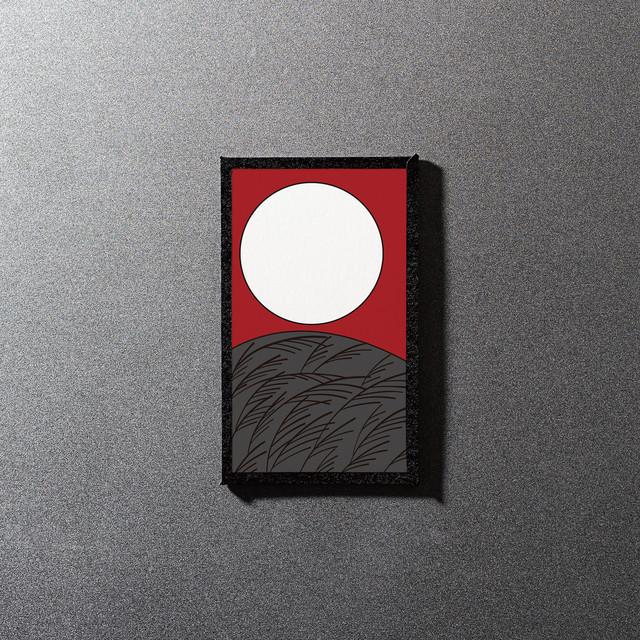
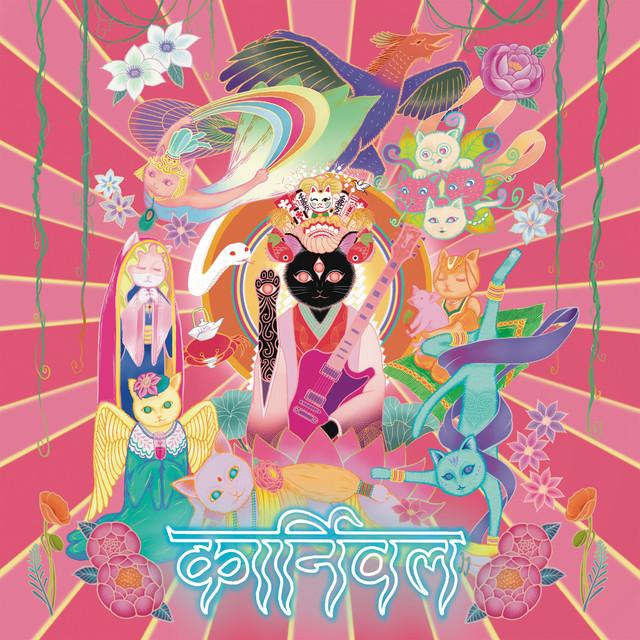
She covered "Uta" for the Buck-Tick tribute album Parade III Respective Tracks of Buck-Tick (January 29, 2020). In April 2024 she released the single "Ningen to Shite", followed in May by several singles including "Dora 1 Dokusō", "Rōman to Soroban" and "Chirinuruwo", and the album Hōjōe. "Airaku" followed in October 2024, "Susuki ni Tsuki" in June 2025, "Jikkenchū" in July 2025 and "Jikkenchū / Hakujitsu no Moto" in August 2025. Her album Kinjite was released in March 2026, the same month she appeared on the cover of Numero Tokyo in a shoot featuring Boucheron jewelry, and the single "Hadaka" followed in July 2026.
Musical style
Sheena's lyrics are known for their distinctive use of kanji, literary language and archaic kana, and are often compared to modern poetry. Early songs frequently name musicians she liked: "Gips" mentions Kurt and Courtney (Kurt Cobain and Courtney Love), "Marunouchi Sadistic" refers to "Benji" (Kenichi Asai of Blankey Jet City), and "Shid to Hakuchūmu" refers to Sid Vicious. Asai later played electric guitar on "Tsumi to Batsu". Her rolled-tongue vocal style is said to show the influence of Alanis Morissette, and her lyrics are compared to those of Miyuki Nakajima and Jun Togawa. She admired Eddi Reader's voice and Janis Ian's singing, writing "Seventeen" in tribute to Ian's "At Seventeen" and covering "Love Is Blind". From Shōso Strip onward, her albums use a symmetry concept: an odd number of tracks, with songs mirrored around the center track in title length, character types and running time. Her guitars have included the Duesenberg Starplayer, Gibson RD Artist and Rickenbacker 620.
Videos
Popular Videos
Latest Videos
Related artists







Discography
裸
1 track
禁じ手
11 tracks
実験中 / 白日のもと
2 tracks
実験中
1 track
芒に月
2 tracks
放生会
13 tracks
浪漫と算盤
1 track
余裕の凱旋
1 track
ほぼ水の泡
1 track
初KO勝ち
1 track